Car, window or shop damaged on 17 October: police report, insurance and when the State pays
After the unrest on the 17 October day of protests: how to file a complaint in France, when to notify your insurer, what compulsory insurance does and does not cover, and when the State is liable for the damage.
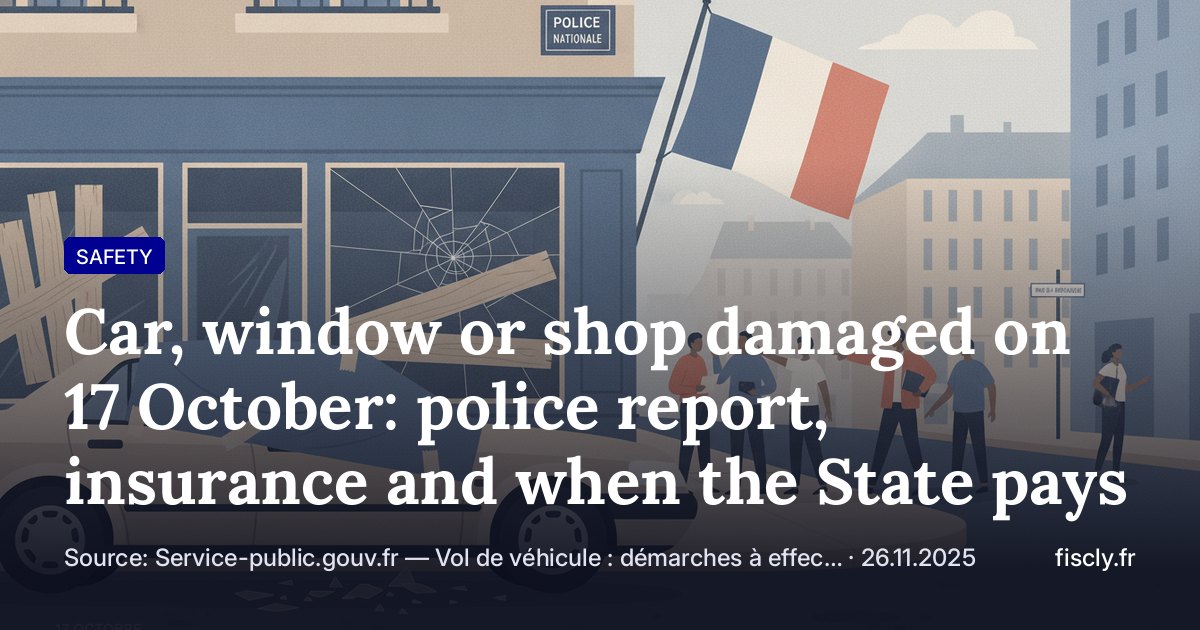
The 17 October day of protests did not pass without unrest. The most visible case is Limoges: according to AFP, on Saturday evening, at the end of a demonstration, the city hall was set on fire. The 19th-century building was badly damaged and its belfry collapsed. The prefecture was also attacked, shops in the city centre were looted and police cars were burned. AFP reports that no one was injured.
For anyone whose car, window or shopfront was damaged on a day like this, the key question is not politics but what to do next. The steps are the same after any unrest, so here is what the official rules provide.
1. Record the damage
Service-public advises taking detailed photos and keeping anything useful for the assessment: invoices, videos, details of anti-theft systems. If the car is still where it was damaged, leave it there.
2. File a complaint (plainte)
The insurer requires proof that a complaint was filed before it will handle the claim.
- Any police station (commissariat) or gendarmerie can take the complaint. The rules say plainly that police and gendarmes must register it, even if the offence happened outside their area.
- Anyone can file one, and it is free. The service-public page does not mention nationality or residence status among the conditions.
- Online (plainte en ligne) is possible only for offences against property where the offender is unknown: theft, break-ins, damage to property. That is the typical situation after a riot. If the offender is known, it must be done in person or by letter to the public prosecutor.
- At the end you get a récépissé (receipt), and a copy of the complaint if you ask for it. It is worth asking: the insurer will need it.
3. Notify the insurer
The claim (déclaration de sinistre) must be made within the deadline set in the contract. Do not wait: if you are late, the insurer may refuse to pay if it shows the delay harmed it. The claim includes your identity, contract number, circumstances, the damage, and a copy of the récépissé.
If your home was also broken into, service-public advises notifying your home insurer too: two contracts may apply.
4. No repairs without agreement
Repairs should not start before the insurer agrees in writing; in most cases an expert assessment comes first. Urgent work, for instance to make a vehicle safe, is allowed, but it should be reported straight away and backed by detailed invoices.
5. What insurance covers and what it does not
This is where newcomers most often get it wrong.
- Cars. Only third-party liability is compulsory (assurance « au tiers »): it covers damage caused to others. Damage to your own car is not paid under it, only under additional, optional guarantees if your contract includes them.
- Rented homes. A tenant is only required to insure the risques locatifs: fire, explosion, water damage. The theft guarantee, which also covers vandalism inside the home, is optional.
Only your own contract shows what is actually included.
6. When the State pays
Article L211-10 of the Code de la sécurité intérieure makes the State civilly liable for damage resulting from crimes and offences committed by open force or violence by gatherings or crowds, armed or not, against people or property.
The rule has a limit. In 2022 the Conseil d'État refused compensation in a case about the blocking of the A1 motorway in 2015. It held that premeditated acts by a structured group that came together only to commit offences are not a gathering within the meaning of the article. Whether a given riot counts as spontaneous is for the courts to decide.
The official materials we checked do not set out how or by when to bring a claim against the State. That is a question for an avocat; Fiscly does not assess individual situations.
What next
We found no official decision announcing new protest dates. If protests resume, check your department's prefecture website for road closures and bans.
Fiscly is an educational tool to help you understand the French tax system. It is not a substitute for professional tax advice. Tax situations are individual — always verify with impots.gouv.fr or a qualified accountant (expert-comptable) for your specific case.