Île-de-France: Pécresse says lycée pupils behind damage will lose some regional aid. What is known, and how school discipline works in France
On 12 November the head of the Île-de-France region said optional regional aid would be suspended for lycée pupils responsible for violence or damage. What was announced, what is not yet confirmed, and what rights pupils and parents have in a disciplinary procedure.
What happened
On Thursday 12 November 2026, Valérie Pécresse, president of the Île-de-France regional council, said on RTL that lycée pupils responsible for violence or damage in schools would lose optional regional aid — she named support for culture and sport. franceinfo reported the statement.
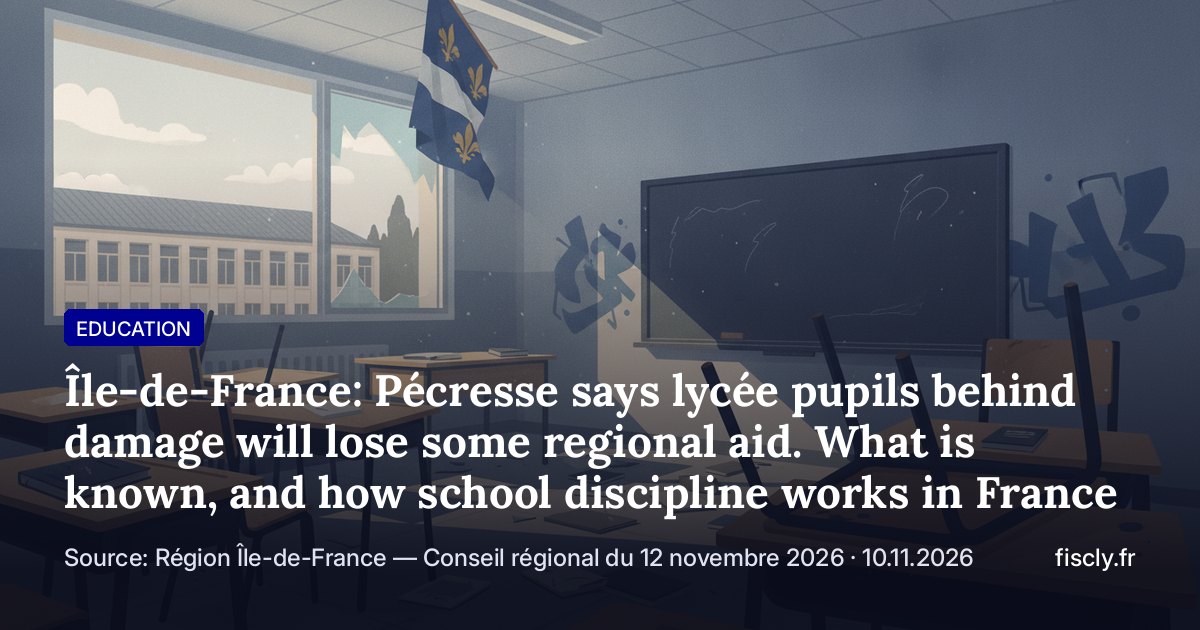
The regional council met in plenary the same day. According to the region's official page, the agenda included report CR 2026-078 on the regional lycée plan and on measures following the pupil protests and the damage to schools. The region says more than 170 lycées were seriously damaged (fires, broken entrance gates) and put an emergency package of €10 million for repairs and security to the vote.
What we don't know yet. We had not found the result of the vote on the region's website when this post was prepared. So this cannot be treated as a rule in force: for now it is a statement and a draft put to the vote. The communist group on the council has already said it will challenge it.
What the draft contains, as described by the press
Describing the draft, La Clé publique reports that:
- aid that could be affected includes, for example, partial reimbursement of the Navigo Imagine R pass, support for sport and culture, for buying books, and the driving-licence voucher;
- textbooks, computers, meal support and sums already paid are not affected;
- it targets damage to regional property assigned to lycées and violence affecting regional staff; taking part in a blockade or demonstration is not enough, nor is merely being present;
- no criminal conviction is required; the council president decides after written notice, the pupil and legal guardians get 15 days to see the file and respond; the decision must give reasons and can be appealed;
- the measure applies for the school year following the decision.
On RTL, Pécresse linked the measure to a pupil being excluded for violence or damage. The final wording will be clear once an adopted text is published.
The region does not exclude pupils
According to the same description of the draft, the region cannot exclude a pupil — that is for the school authorities. Sanctions are imposed by the head of the school or by the disciplinary council. Service-public explains how this works (page « Discipline au collège ou au lycée », checked 1 October 2025):
- The head of the lycée can impose a warning, a reprimand, a responsibility measure (up to 20 hours), or temporary exclusion from class or from the school for up to 8 days.
- The lycée disciplinary council (14 members, including 2 elected parents and 3 elected pupils) can also exclude a pupil permanently. It must be convened in particular for physical violence against a staff member.
- Rights of defence. The pupil is told what they are accused of, can see the file, may remain silent and may be assisted. Before the head's decision there are at least 2 working days to prepare a defence; summons to the council come at least 5 days before. If the pupil is a minor, parents are informed and may submit observations.
- Appeals. A council decision is appealed to the rector within 8 days of written notification — a mandatory step before going to court. A sanction by the head can be challenged within 2 months.
In practice for a foreign family
- Letters about a disciplinary procedure arrive by registered post or are handed over against signature. Deadlines are short — 8 days to appeal a council decision — so such letters are worth opening at once and, if your French is limited, getting translated straight away.
- If the regional measure is adopted, the draft provides for a separate procedure with written notice and 15 days to respond — distinct from a school sanction.
- According to the description of the draft, meal support, textbooks and computers are not affected.
No further step has been announced yet: we are watching for publication of the council's decision.
Fiscly is an educational tool to help you understand the French tax system. It is not a substitute for professional tax advice. Tax situations are individual — always verify with impots.gouv.fr or a qualified accountant (expert-comptable) for your specific case.